


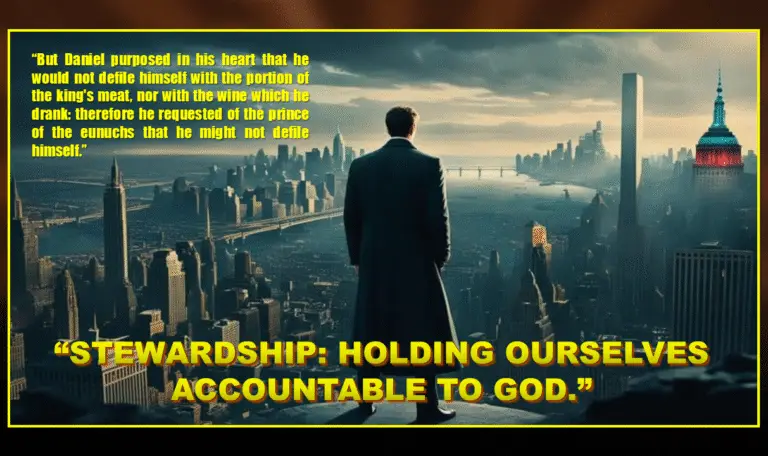
Biblical Stewardship: Holding Ourselves Accountable to God
Title: Biblical Stewardship: Holding Ourselves Accountable to God
Series: 17th Church Anniversary Message
Speaker: Ptr. Ronaldo M. Salunga
Scripture Focus: I Corinthians 4:1-2; Matthew 25:14-30; Titus 1:7-9
Introduction: The Call to Biblical Stewardship
Biblical stewardship is not merely about management; it is about “holding ourselves accountable to God”. As we celebrate our 17th Church Anniversary, we are reminded that the fundamental principle behind stewardship is accountability (I Cor. 6:19-20). We must recognize that true spiritual stewardship requires experience and preparation; it is not a role one can step into at will, but a responsibility that demands a real gift and development. (You can also view highlights from the celebration on Facebook).
In the realm of biblical stewardship, the standard set before us is faithfulness in the small things:
“He that is faithful in that which is least is faithful also in much: and he that is unjust in the least is unjust also in much.” (Luke 16:10)
We are called to minister to one another with the gifts we have been given:
“As every man hath received the gift, even so minister the same one to another, as good stewards of the manifold grace of God.” (I Peter 4:10)
1. Biblical Stewardship of Divine Time
First, we are called to practice biblical stewardship of our time. In a world of distractions, the Bible commands us to make the most of every moment to labor for God:
“Redeeming the time …” (Eph. 5:16)
However, we must remember that Christianity is not just about knowing more about Christ, but is a life-long journey of intimacy with Him. We can know all the doctrines yet lack personal intimacy with the Lord. Like Mary and Martha (Luke 10:38-42), we must choose the “good part”.
-
Key Insight: “God doesn’t want you to do more for him. He wants you to be more for him”.
-
The Warning: Israel wandered for 40 years and knew God’s miracles, yet their hearts were far from Him because they were unsure of their vision and mission. We must set our priorities, for doing important things at the same time causes stress and loss of focus.
2. Biblical Stewardship of Divine Talent
Secondly, we must exercise biblical stewardship over our talents. God has given His Holy Spirit to every man to profit withal, distributing gifts distinctively as He wills. These gifts are not for us to serve ourselves, but to serve Him and others.
We must challenge ourselves: Are we “Casual Christians” or “Captivated Christians”?. We need to let go of the idea that we can serve God only when it is convenient, or that we can witness to others only as long as it doesn’t embarrass us.
-
The Mandate: Be a committed Christian to the maximum, not on the bare minimum!
-
The Purpose: God empowers us with wisdom to reach the lost. Our spiritual growth depends on the level of surrender we give to the Holy Spirit.
3. Biblical Stewardship of Divine Treasures
We are also tasked with the biblical stewardship of divine treasures. The Parable of the Talents (Matt. 25:14-30) teaches us about faithfulness in investing God’s treasures. God never intends for His stewards to be losers, but to grow and succeed.
While many Christians struggle greatly with the “Sermon on the Amount”, we are reminded not to manage sin, but to manage God’s gifts.
-
The Investment: We must invest for eternity, not for “uncertain riches”.
-
The Measure: Our love for Christ is measured by how much we are willing to give from the bottom of our hearts. Just as Abraham gave up Isaac and God the Father gave His Son for our redemption, we are called to selfless giving.
4. Biblical Stewardship of Divine Truths
The church is the pillar and ground of the truth, making us responsible for the biblical stewardship of divine truths. We are stewards of the “mysteries of God”—divine truths previously hidden but now revealed to the Church.
“Let a man so account of us, as of the ministers of Christ, and stewards of the mysteries of God. Moreover it is required in stewards, that a man be found faithful.” (I Cor. 4:1-2)
We must not anchor our Christian journey on “spiritual adrenaline” or emotional highs. Faith feeds on doctrine, not feelings.
-
The Danger: Do not endorse any false god, false teacher, or false doctrine.
-
The Responsibility: We must study the Bible not just for ourselves, but to help others who are misinformed or deceived. Seek what is spiritually sanctifying, not just what is emotionally satisfying.
5. Biblical Stewardship of Divine Trust
Finally, we are called to the biblical stewardship of divine trust. A steward must be blameless, not self-willed, and a lover of good men:
“For a bishop must be blameless, as the steward of God; not selfwilled, not soon angry, not given to wine, no striker, not given to filthy lucre…” (Titus 1:7)
We see this exemplified in Daniel. Though he was given a new name and new training in captivity, he stood firm:
“But Daniel purposed in his heart that he would not defile himself with the portion of the king’s meat, nor with the wine which he drank…” (Daniel 1:8)
-
The Test: Before faith is trusted, it must first be tested. Joseph was sold as a slave before he ruled Egypt; Nehemiah faced ridicule before rebuilding the walls.
-
The Question: Can your faith be trusted?.
Conclusion: A Call to Faithful Stewardship
As we move forward, we must ask ourselves, “What shall I do?” Biblical stewardship has an end, and eventually, we will face the judgment seat of Christ:
“For we must all appear before the judgment seat of Christ; that every one may receive the things done in his body, according to that he hath done, whether it be good or bad.” (II Cor. 5:10)
When God called Moses, He asked a simple question:
“And the LORD said unto him, What is that in thine hand?” (Exodus 4:2)
It was just a rod, but when it became God’s rod, it parted the Red Sea and brought victory. When our abilities, talents, and gifts become God’s gifts, He can use them to accomplish great things.
Let us not be Christians for decoration, but for circulation. Let us be faithful stewards, for faithful people are faithful whether they have little or much.
Call to Action: What is in Your Hand?
As we look back on 17 years of God’s faithfulness to Antioch Baptist Church, we also look forward with a renewed sense of responsibility. The question remains for each of us: What is in your hand?
You may feel your resources are small, your time is limited, or your influence is weak, but remember: God specializes in using ordinary things for extraordinary purposes. A simple rod in Moses’ hand became the “rod of God”. This week, take a moment to evaluate your biblical stewardship. Are you giving God your best time, your true talent, and your whole heart? Let us not wait for a “better time” to serve. The time to be faithful is now.
Closing Prayer
“Heavenly Father, we thank You for entrusting us with the riches of Your grace and for the 17 years You have sustained this church. Forgive us for the times we have been ‘Casual Christians’ rather than ‘Captivated Christians’.
We ask for the wisdom to redeem our time, the courage to use our talents for Your glory, and the generosity to invest our treasures in eternity. Take what is in our hands, however small it may seem, and use it to build Your Kingdom. May we live in such a way that when we stand before You, we will be found faithful. In Jesus’ name, Amen.”